Control Who Can Go Where
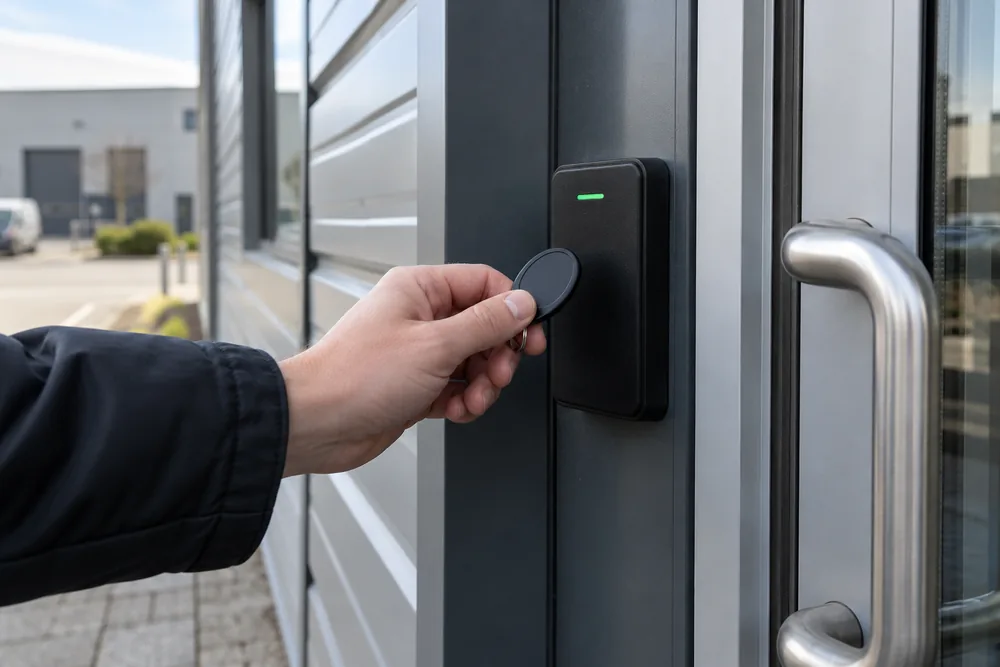
Access control systems in Sheffield help businesses manage entry to offices, production spaces, stores and restricted rooms. Instead of distributing a physical key for each lock, authorised users present a fob, card or another agreed credential. Permissions can then reflect a job role, a shift pattern or a temporary contractor visit.
The starting point is a door schedule, not a product catalogue. A reception entrance, a stock room and a plant room can need different arrangements. We help turn those operational requirements into a scope covering readers, controllers, locks, power supplies, permissions and the way staff leave each controlled space.
When Keys Stop Being Practical
Access control is useful when staff turnover makes key management difficult or several tenants share an entrance. It can also support businesses that need to separate public areas from workspaces. Lost credentials can be cancelled, provided the management system and operating procedure allow an authorised person to make that change.
Access records can help investigate an event, but they do not prove that only one person entered through a door. Tailgating and propped doors remain practical risks. Reception procedures, visitor passes and staff awareness should support the electronic system, especially where access must be restricted during normal opening hours.
Survey, Design And Installation
First, identify the doors, user groups and opening times. The survey checks the door material, frame, closer, hinges, existing lock and escape function. Poor alignment or a weak frame should be addressed before fitting a reader, since electronics cannot correct a door that will not close and latch reliably.
Next, agree the control architecture and management arrangements. A standalone system may suit a simple entrance, while a managed network can support several doors and permission groups. Check how credentials are issued, cancelled and backed up, and what the system does if the network connection or power supply fails.
Installation includes the lock hardware, reader, controller, cables and the agreed exit and emergency-release arrangements. Commissioning should test valid and rejected credentials, door-held-open indications where specified, emergency operation and the response to loss of power. Your nominated administrator should practise routine user changes before handover.
Fire Escape And Personal Information
Access-controlled doors must be considered within the fire risk assessment. The Regulatory Reform (Fire Safety) Order 2005 applies to most non-residential premises in England and Wales, and security arrangements must not obstruct necessary escape. Agree the release strategy with the responsible person and the fire-safety designer where needed.
The exact hardware depends on the door and its escape role. A fire alarm interface is not a substitute for assessing all release arrangements. Read government advice on escape routes and emergency doors before changing a controlled exit.
Named access logs are personal information. Limit access to those logs, decide how long they are needed and explain the purpose to staff. The NPSA access control guidance provides a useful starting point for understanding access permissions and system functions.
Keep The Door Schedule Current
A door schedule should record the controlled opening, the people who need access and the agreed emergency behaviour. It is a useful reference when a tenant changes, a department moves or a new contractor needs temporary entry. Keep the schedule with the system documentation rather than relying on one administrator remembering every permission.
Review the actual door operation as part of routine checks. A reader may grant access correctly while a damaged closer leaves the opening unsecured. Report mechanical defects through the same agreed process as electronic faults so the complete entrance is restored to working order.
Costs And Ongoing Administration
Cost depends on door count, lock type, door condition and the cable route between hardware and controllers. Software licensing, credential quantities and network work may add recurring or project costs. Ask the quotation to distinguish installation from door repairs, management software and ongoing support.
Nominate someone to remove leavers, review temporary access and keep permission groups accurate. Agree how faults will be logged and how users enter safely during an outage. Where visitors need to speak with reception before admission, compare door entry systems with staff credential access.
Access Control Systems Questions
Can Lost Access Fobs Be Cancelled?
Lost access fobs can usually be cancelled in a managed access control system by an authorised administrator. The exact process depends on the selected equipment and whether controllers are connected. Keep an accurate record of issued credentials, tell staff how to report a loss, and confirm the cancellation process during system handover.
Will Access Control Work During A Power Cut?
Access control behaviour during a power cut depends on lock selection, backup power and the agreed escape strategy. Some doors release while other security functions may remain supported by batteries. The design must explain the behaviour of each door, and commissioning should test the relevant failure conditions with the responsible person present.